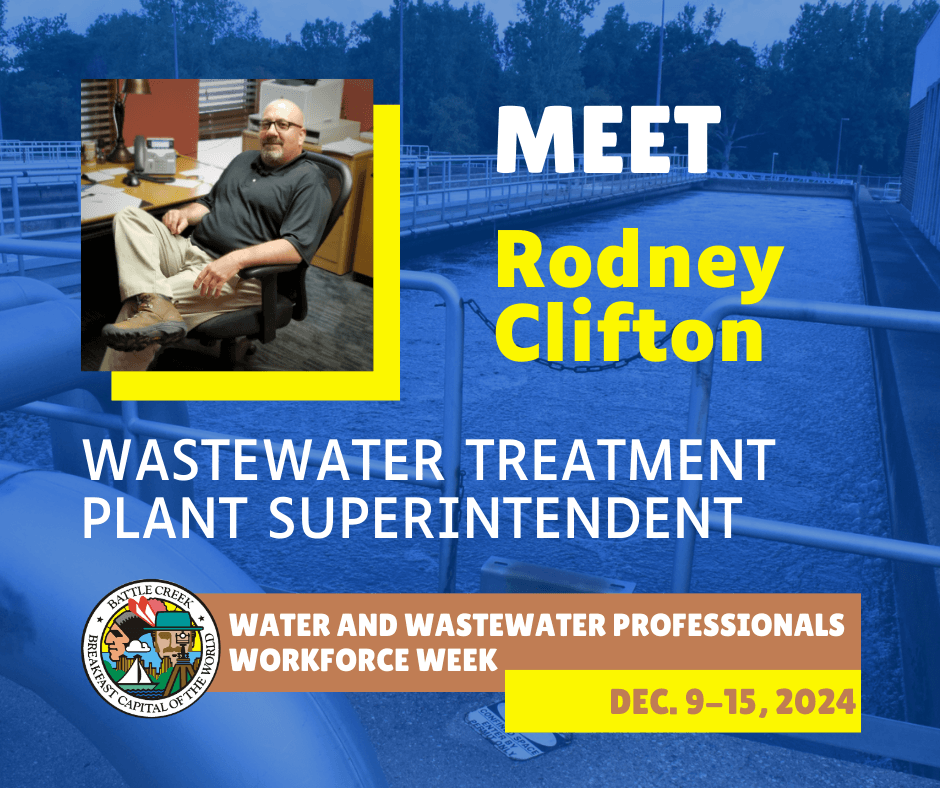
Dec. 9-15, 2024, is Michigan Water and Wastewater Professionals Week. Join us this week as we spotlight the essential water and wastewater professionals who provide water services to Battle Creek neighbors.
Meet Rodney Clifton! After graduating from Pennfield High School, Rodney went on to earn a degree in Environmental Science from Lake Superior State University. Today, Rodney is a Wastewater Treatment Plant Superintendent for the City of Battle Creek.
What are your primary duties?
I'm responsible for managing the plant’s staff and budget and for ensuring the city remains compliant with our National Pollution Discharge Elimination System permit.
What’s the best part of your job?
Knowing that every single day we are responsible for treating eight million gallons of wastewater and discharging clean water to the Kalamazoo River for beneficial reuse.
What’s a recent project that gave you a great sense of accomplishment?
A recent project that gave me a great sense of accomplishment was improving two of our largest lift stations. These stations are crucial for transporting wastewater from the communities we serve to the treatment plant. By replacing the aging infrastructure, we significantly increased both the capacity and reliability of these stations.
What’s a fun or interesting fact you can share?
Flushable wipes should never be flushed or put into the sanitary sewer system. These “flushable” wipes clog pumps and sewer lines throughout the sewer system causing sewage backups and overflows.
What are some of the most significant improvements or changes you’ve seen in the water and wastewater systems in Battle Creek?
One of the most significant improvements we've seen in the water and wastewater systems in Battle Creek is the enhanced nutrient removal efficiency at our wastewater treatment plant. By adding anoxic/anaerobic zones at the beginning of our aerators, we've enabled microorganisms to extract more phosphorus and ammonia from the wastewater stream. These changes have made it much easier for us to maintain low concentrations of these nutrients in our discharge to the Kalamazoo River.